Friday, 12 April 2019

The Yogourt Chronicles—Episode 2: Céréale Killers

Previously on The Yogourt Chronicles: 

I had promised an instalment of TYC dealing with maple syrup, assuming such a quintessentially Canadian product would be steeped in linguistically interesting packaging and promo examples, but as it turned out I spent twenty minutes in the vast syrup section of my local grocery store and came up wanting. A little further down the breakfast aisle, however, I stumbled upon a veritable treasure trove of kooky, kwazy and krunchy bilingual product packages.

Ladies and gentlemen: Breakfast Cereal.

Breakfast cereal is one of those products that has 1) a considerable amount of surface area, 2) off-the-wall zany child-oriented advertising, and 3) 97,000 different varieties. As a result, Canadian breakfast cereal boxes boast some of the most complicated and interesting examples of the strategies that companies use to comply with the nation's bilingual packaging and promotional standards.

Given the excessive amount of surface area on a cereal box, one common strategy is to print one face of the box entirely in French and the other entirely in English (Fig. 1):

Fig. 1
This is a useful space-saving tactic, but it is not always an option, because oftentimes marketers want to use the back of the box for some sort of crazy bilingual word finding game or mail-in contest or other child-mesmerizing scheme (Fig. 2).

Fig. 2

In this case, the French and English text will all have to appear on the front of the box, which, despite the expansive cereal box face, can result in some cluttered looking products. Fortunately for designers, registered product names don't have to be translated. So you end up with things like "Can't get enough of that... On n'a jamais assez des céréales... SUGAR-CRISP" (Fig. 3).


Fig. 3


Of course, sometimes when the English name of a product might be confusing or meaningless in French, the marketers prefer to come up with an alternate version. Cinnamon Toast Crunch, for instance, is rendered more succinct and comprehensible as Croque-Cannelle (Cinnamon Crunch) in French, because cinnamon toast isn't really a thing outside of Anglo-North America. The result? One of the most chaotic (and slightly psychedelic) looking cereal boxes in the universe (Fig. 4).

Fig. 4

Incidentally, Cinnamon Toast Crunch has even been translated for English speakers outside of North America. In the United Kingdom they call it:

Fig. 5
Elsewhere, they're called Cini-Minis, as seen on this trilingual package designed for sale in Eastern Europe with text in Polish, Czech and Romanian (with some English thrown in for good measure):


Also, apparently it was necessary for Cap'n Crunch's name and rank to be Frenchified, possibly in order to align with the Quebecois branch of the Canadian navy (Fig. 7). The word Crounche, along with its derivative Crounchifique, is entirely made up.

Fig. 7

Sometimes the promotional masterminds at these food companies try to get creative and use the opportunity of translating product names to make some sort of hilarious hilarious pun. Quaker's kiddie oatmeal "Dino eggs" become "Dinosoeufs" (which sounds a lot like the French word for dinosaurs) (Fig. 8).

Fig. 8
And sometimes they blow it. They let the world down and miss the chance at a perfectly good pun. Such is the case with my son's toothpaste (Fig. 9):

Fig. 9

Watermelon Burst toothpaste/dentifrice.

Honestly? 

You couldn't come up with Pastèque-splosion?


By the way, breakfast cereals are one of the worst offenders for cavities, so if you're planning to Croque on the Capitaine, or if you're feeling Curious about Cini-Minis, don't forget to use that Pastèque-splosion or whatever it's called. This has been a public service announcement.

Next time: Over-the-counter medications (or something).

Friday, 8 March 2019

Link: H-Net Haiti Interview

I was recently interviewed on H-Net Haiti about my new English translation of an old Haitian novel. Fernand Hibbert's Les Simulacres was published in 1923 during the United States' Occupation of Haiti. It's a comedic and poignant look at the pretensions of powerful nations from the perspective of the underdeveloped world. A classic of Haitian literature, is is still studied and enjoyed in the country today.  My translation, Pretenders, contains valuable insights for ongoing issues of sovereignty and development in Haiti.

Check out the interview here.

Buy the book here.

Thursday, 7 March 2019

The Yogourt Chronicles—Episode 1: Introduction, or, I've got 99 problem(e)s but a grave accent ain't one

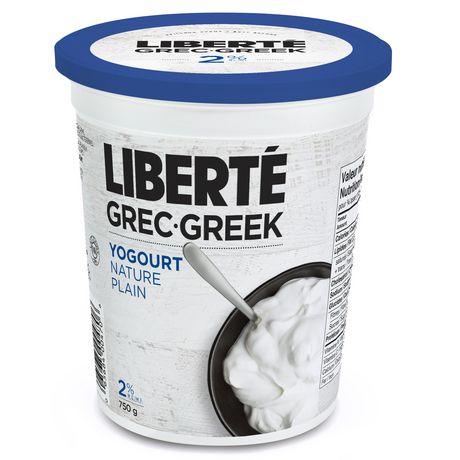
Ever since Prime Minister Pierre Trudeau initiated the official bilingual policy at the federal level in 1971, products sold in Canada of all sorts have been required to display all text in both English and French, regardless of where they will be sold. That goes for nutritional information; it goes for ingredients; it goes for any advertising slogans—in a word, tout. With the limited amount of usable surface space on any given product, advertisers and packaging designers have had to muster up no small measure of ingenuity in order to meet the federal requirements. One of the most cited examples is yogurt. While English Canadians generally write 'yogurt' and French Canadians write 'yoghourt', Canadian dairy companies tend to label the product, 'yogourt,' which is a less used but acceptable spelling in both languages.

Design strategies to meet the requirement range from patently clever to awkwardly wordy to downright embarrassing. Normally, the only solution is to present text in both language, but quite frequently designers attempt some form of compromise, as in the case of yog/h/o/urt. 

Here's a typical example from a bottle of shampoo/shampooing:


5 problems, 1 solution. Or, in French, 5 problèmes, 1 solution. It's a bit ugly to an English speaker (what's up with the extra E, eh?), but it works okay in French because French speakers are pretty accustomed to seeing letters in parentheses; French grammatical rules regarding gender agreement mean you'll often see things like: "es-tu content(e)?" or "chaque étudiant(e)." Also, accents are typically not necessary on capital letters, so the designer was able to avoid the grave accent (`) on the first E by simply using capital letters. In sum, the designer found 1 solution to about 5 problems.

This series of blog posts is my modest attempt to track and highlight the best and the worst of product designers' attempts to create products that are attractive and that meet the language requirements. The Sleek, the Chic and the  Linguistique, if you will. Tune in next time to learn about bilingual product design strategies on that most quintessentially Canadian of products, maple syrup.

Thursday, 25 January 2018

A Resolution on Resolutions

We’re coming up to the end of January, which means a lot of people have already started to renege on their New Year’s resolutions. Last year I resolved to take a CPR class and never did. I was thinking about this widespread annual tendency toward failure this morning, and I decided we’ve been going about New Year’s resolutions the wrong way. Year after year, when we use the noun resolution we have in mind the definition ‘a firm decision,’ related to the adjective resolute and the verb to resolve. But resolution and resolve have other nuances of meaning. Among these, the word can also mean ‘the action of solving a problem, dispute, or contentious matter’ (i.e. resolve an issue, find a resolution). I propose, therefore, that rather than making resolutions, we find resolutions in 2018. May we resolve disputes between friends, families and nations as we strive for a more peaceful world. May we resolve moral and financial debts as we seek greater equality between people and countries. May we seek and find a resolution for the ongoing struggle to feed and provide clean water and health services for those in need in Canada and around the world. In a word, may we resolve to resolve.

We can take this one step further. The word resolution also refers to a formal decision or declaration that is produced collaboratively by some sort of assembly or group (i.e. the European Parliament passed a resolution, the Board of Directors proposed twelve resolutions). An obvious problem with traditional New Year’s resolutions is undoubtedly the lack of accountability inherent in goals for self-improvement. Why not make New Year’s resolutions the way a committee makes resolutions? When January rolls around we should assemble committees, in our families, in our neighbourhoods, etc., to draft and adopt a list of formal resolutions. If we base the content of these resolutions on the previous definition of resolution (the action of solving a problem or dispute) we should be able to cooperatively make a real difference each year. A simple act of redefinition can stop us from buying and wasting gym memberships, and force us to use each new year to actively find resolutions.